

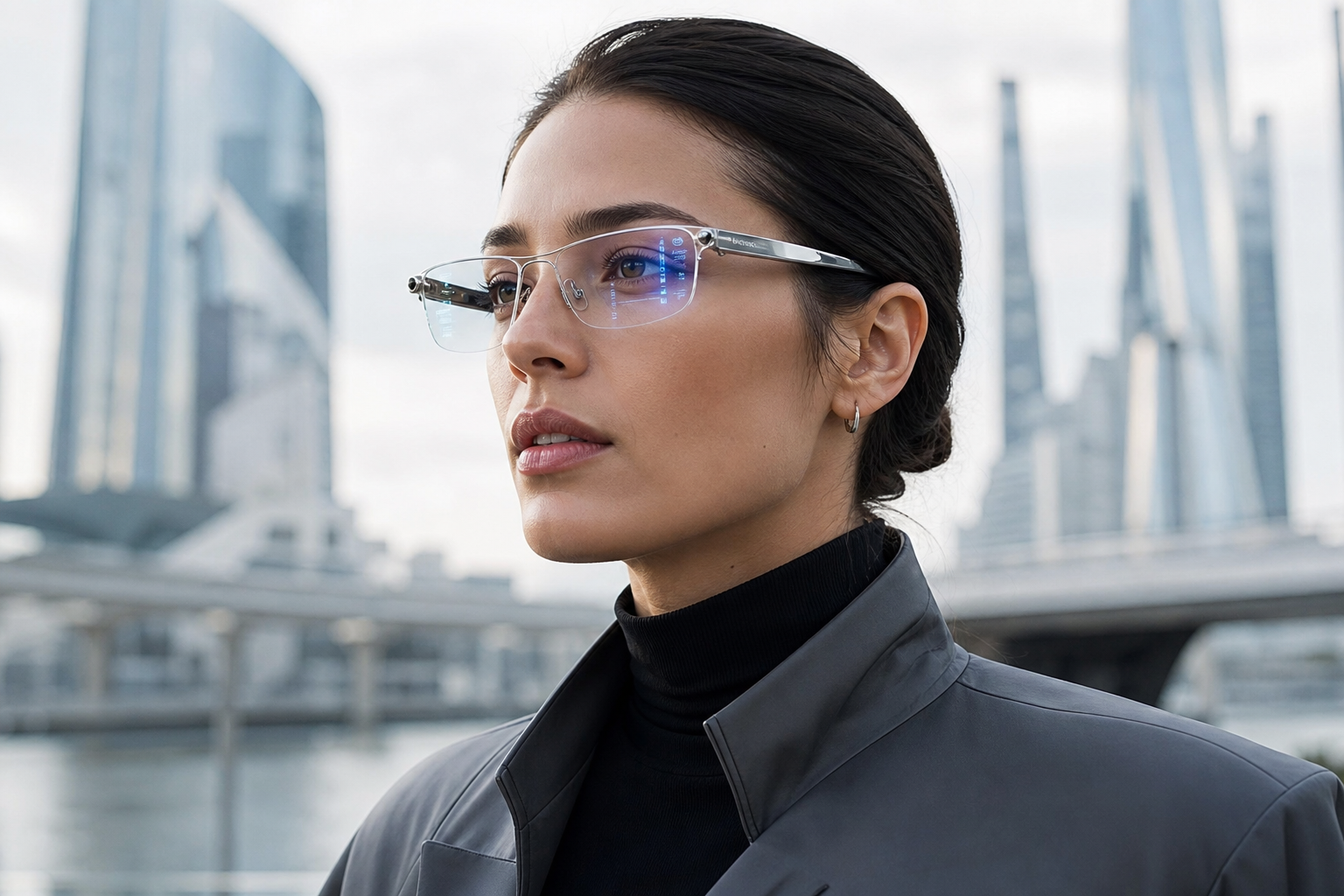
Fashionable AI Smart Glasses in 2026
TL;DR: Fashionable AI Smart Glasses are moving from niche tech gadgets to mainstream fashion accessories in 2026. Brands that treat them as stylish eyewear first and connected devices second will win. Concept Eyewear, an OEM/ODM partner in Vietnam and Hong Kong, helps labels design and engineer AI smart glasses. Additionally, they ensure ISO 12312 and Z87 compliance while keeping production viable for EU, US, and Asia markets.
Why are AI smart glasses a defining eyewear trend in 2026?
In 2026, Fashionable AI Smart Glasses sit at the intersection of fashion, wearables, and everyday productivity.
They draw from eyewear trend reports that highlight smart eyewear and high-tech finishes as key growth areas.
Instead of bulky headsets or overtly technical devices, the newest concepts are slim, eyewear-first designs.
They integrate microphones, speakers, sensors, and sometimes displays into familiar sunglasses and optical silhouettes.
This shift makes AI smart glasses approachable for mainstream consumers and opens a significant opportunity for brands.
Leading fashion and eyewear publications have been documenting a move toward futuristic, chrome-inspired looks and expressive frames, while technology media tracks the rise of AI-powered glasses from major collaborations between global tech platforms and established eyewear brands. The message is consistent: consumers want devices that look like the eyewear they already love, but quietly layer in AI assistance for navigation, communication and content capture. For OEM/ODM buyers, this trend is less about inventing a new category and more about extending existing sunglasses and optical lines into connected versions.
How are tech and eyewear brands shaping the AI smart glasses landscape?
Several large technology companies have confirmed timelines for launching intelligent eyewear, often in partnership with fashion-forward brands already known for strong frame design. Their strategies typically split into two families: audio-first AI glasses with no visible display, and display-equipped glasses that use small in-lens or in-frame screens to show contextual information.
Audio-first designs lean on subtle speakers and beamforming microphones to deliver AI responses.
Additionally, they provide turn-by-turn directions or notifications directly to the wearer without broadcasting sound to people nearby.
Display-equipped versions go a step further, layering heads-up information such as translations, prompts or contextual cues.
For OEM/ODM manufacturers like Concept Eyewear, the practical implication is clear.
Frames must be engineered from the outset to accommodate battery, PCB, antennas and any optical modules.
Thus, they must respect the weight, balance and comfort expectations of the Fashionable AI Smart Glasses.
How should brands design AI smart glasses for fashion-focused collections?
Designing AI smart glasses for a fashion collection starts with the same principles as any trend-led eyewear project: silhouette, material story, color palette and fit. The difference is that every stylistic decision has an engineering counterpart. A slim metal frame with ultra-thin temples may look elegant, but the temple cross-section must still house wiring and sometimes touch controls. Oversized shield or wrap silhouettes provide more surface area for electronics and can be ideal for sport-inspired AI audio concepts, but require careful curvature management to maintain optical performance and wearer comfort.
Contemporary trend coverage shows a strong appetite for minimalist, gender-neutral thin metal frames and chromed, mirror-like finishes. Brands can leverage these macro trends by developing AI smart glasses in two main styling directions: understated thin metals for office, urban and lifestyle use, and bold oversized shields or wraps for sport-luxe and streetwear. In both cases, it is essential that the consumer can recognize the frame style without needing to understand the technology inside.
Which frame materials and constructions work best for AI smart glasses?
From a manufacturing perspective, stainless steel, beta titanium and high-quality acetate remain the core materials for AI smart glasses. Lightweight metals such as titanium support comfortable long wear times and provide precise milling channels for components, while acetate offers more volume in the temple and front for batteries and boards, plus a rich color and pattern story aligned with luxury sunglasses.
Hybrid constructions are increasingly effective: a slim stainless-steel core or skeleton for strength and alignment, over-molded or laminated with acetate or bio-based polymers for volume and color. This allows OEM/ODM partners in Vietnam and Hong Kong to maintain tight tolerances on hinge alignment and lens groove geometry while also reserving cavities for electronics. Reinforced hinges, stainless-steel core wires and carefully placed screws or rivets help protect internal wiring during repeated opening and closing of the temples.
What lens options and coatings support AI smart glasses performance?
Lens selection for AI smart glasses must balance weight, optical clarity and safety. Polycarbonate and Trivex are typically preferred for sunglasses and sun-performance variants, thanks to their impact resistance and compatibility with high-curve wraps. Where optical prescriptions are required, high-index materials can be used to control lens thickness while still meeting impact requirements for relevant segments.
From a standards perspective, sun lenses in AI smart glasses should be designed to comply with ISO 12312 requirements on UV protection, category, spectral transmittance and optical quality. For performance-oriented designs, particularly those positioned for cycling, running or workplace environments, brands can move toward concepts inspired by ANSI Z87-type impact and coverage expectations, even if the final product is classified as fashion rather than formal protective eyewear. Coatings such as anti-reflective, oleophobic and scratch-resistant finishes remain essential, and photochromic or gradient tints can add differentiation while maintaining AI usability in varied lighting.
How do AI smart glasses fit EU, US and Asia markets?
Despite shared global hype around AI, consumer expectations for eyewear differ by region. EU markets generally favor understated aesthetics, high craftsmanship and clear communication of sustainability and standards. In the US, consumers are more open to bold silhouettes and lifestyle messaging, especially when linked to productivity and fitness. Across Asia, fit and weight are critical, and there is strong interest in tech-forward products that still feel discreet enough for everyday urban use.
For AI smart glasses, this means adjustable regional tuning of color, curvature and merchandising story. EU-focused collections might emphasize slim metals, natural milky or neutral color palettes and clear documentation of lens category, UV performance and any workplace-appropriate features. US lines can lean more heavily into oversized shields, sport-luxe wraps and expressive chromed mirrors, marketed as hands-free AI assistants for commuting, training and content creation. Asia-focused assortments often prioritize lighter constructions, narrower bridge designs, adjustable nose pads and slightly smaller lens heights, ensuring a precise anatomical fit that works with higher ambient temperatures and long wear times.
Which standards and testing workflows apply to AI smart glasses?
AI smart glasses must navigate overlapping standards regimes: eyewear regulations, electronics safety and sometimes occupational requirements. On the eyewear side, ISO 12312 provides the baseline framework for sun lens performance, UV filtration and optical tolerances. OEM/ODM partners should design testing workflows that verify lens category, transmittance and prismatic behavior for every production batch, especially when using complex tints or mirrors that may affect light transmission.
Where AI smart glasses are marketed toward workplace or active performance niches, it is prudent to benchmark impact and coverage against Z87-style expectations even if formal certification is not required. This means validating frame deformation, hinge strength and lens retention under controlled impact tests. In parallel, electronics must be tested for thermal behavior inside enclosed acetate or metal structures, EMC performance and charger safety. Vietnam and Hong Kong manufacturing hubs increasingly offer integrated labs or third-party partnerships capable of coordinating eyewear and electronics testing so that brands receive consolidated reports rather than fragmented documentation.
How can OEM/ODM partners in Vietnam and Hong Kong deliver AI smart glasses at scale?
Scaling AI smart glasses requires a manufacturing ecosystem that understands both eyewear and embedded electronics. Concept Eyewear operates OEM/ODM facilities in Vietnam and project management hubs in Hong Kong, allowing brands to combine cost-effective frame production with agile international coordination. Vietnam’s mature eyewear supply chain offers reliable access to acetate sheets, stainless steel and titanium components, lens surfacing partners and packaging converters, while Hong Kong provides proximity to electronics vendors, logistics providers and brand headquarters across Asia-Pacific.
For most brands, the optimal approach is to treat AI smart glasses as an extension of existing eyewear product lines, with synchronized BOM and QC processes. Frames, lenses and mechanical components can follow familiar workflows in Vietnam, while electronics modules are integrated during dedicated assembly stages under ESD-controlled environments. This division of labor keeps yields high and supports flexible MOQs, from pilot runs for DTC brands to large-scale campaigns for global retailers.
What does a typical AI smart glasses OEM/ODM project look like?
A well-structured AI smart glasses project with Concept Eyewear usually follows these stages:
- Trend and concept alignment: defining silhouettes, materials, AI feature sets and target regions based on current eyewear fashion coverage and brand positioning.
- Engineering design: co-developing CAD models that reserve volume for electronics while adhering to optical and comfort constraints, including lens base curve and temple ergonomics.
- Prototype and fit testing: producing initial samples with dummy or functional electronics, checking fit on EU, US and Asia headforms, and refining bridge, temple and weight distribution.
- Standards and validation: running ISO 12312 lens tests, impact and retention checks inspired by Z87, and electronics safety validations before freezing the design.
- Mass production and QA: executing scaled frame and lens production in Vietnam, integrating electronics, and applying multi-stage QC for both eyewear and devices.
How should brands think about price tiers and merchandising?
AI smart glasses sit above conventional sunglasses in price, but the exact premium depends on materials, feature sets and positioning. Entry-tier concepts use simple audio-only AI functions and more standardized frame designs, mid-tier collections add upgraded materials, bespoke silhouettes and enhanced lens packages, while premium tiers incorporate advanced AI capabilities, signature aesthetics and limited-edition colorways.
Retail merchandising must highlight both the eyewear and device value. On-shelf displays and e-commerce PDPs should show the frame fit, lens color and styling first, then clearly explain AI features in concise language. Cross-selling with regular sunglasses and optical frames can help consumers view AI smart glasses as an optional upgrade rather than a separate, intimidating category. For OEM/ODM buyers, aligning price tiers with clear BOM options and MOQ ranges helps keep margin structures predictable across wholesale, DTC and marketplace channels.
| Concept / SKU | Target Region | Price Tier | Key Materials | Standards Focus |
|---|---|---|---|---|
| Urban AI Audio Shield | US & Global Streetwear | Mid to Premium | High-curve acetate front, stainless-steel core temples, polycarbonate sun lenses | ISO 12312 UV and optical performance, impact benchmarks inspired by Z87 |
| Minimalist Smart Metal | EU Lifestyle & Office | Mid | Beta titanium front and temples, slim electronics channels, high-index prescription or plano lenses | ISO 12312 compliance for sun variants, optical clarity and comfort for all-day wear |
| Active Performance Smart Wrap | Asia-Pacific Fitness & Commuting | Upper Mid | Lightweight TR-90 or bio-nylon wrap frame, rubberized inserts, impact-resistant sun lenses | ISO 12312 sun protection, retention and impact checks aligned with performance expectations |
How can brands collaborate with Concept Eyewear on AI smart glasses?
Concept Eyewear positions itself as a design-led OEM/ODM manufacturer that understands both traditional eyewear craftsmanship and the emerging world of AI-driven frames. Brands can start by sharing existing bestsellers in sunglasses and optical categories, then work together to identify which silhouettes and materials translate best into AI smart glasses. Early collaboration around electronics partners and software platforms ensures that frame architecture supports long-term firmware updates and accessory ecosystems.
As part of a broader content strategy, brands can also draw on Concept Eyewear’s trend resources and internal guides, such as existing articles on topics like gender-neutral thin metal frames, to build cluster-based SEO and education around connected collections. An internal link from an AI smart glasses article to a style-focused guide on thin metal trends or wraparound sunglasses can help both users and search engines understand the brand’s full eyewear offering. For example, a brand might link from this AI-focused content to a dedicated guide on thin metal styles hosted by Concept Eyewear.
What resources and references should brands follow for ongoing trend alignment?
To keep AI smart glasses collections aligned with fashion and consumer expectations, brands should regularly review eyewear-specific publications and reports that track color, silhouette and material trends, as well as technology and fashion platforms that analyze smart wearables. Combining this macro view with data from retail partners and e-commerce analytics helps refine SKU mix and regional allocations over time.
Concept Eyewear can support this process by sharing curated insights and co-writing content that connects trend language to manufacturable specifications. For deeper industry context, brands should also consult eyewear-focused magazines and portals that cover 2026 frame trends and smart eyewear developments, along with general fashion and technology reports on AI-powered accessories.
Why partner with Concept Eyewear in Vietnam and Hong Kong for AI smart glasses OEM/ODM?
Choosing Concept Eyewear as an OEM/ODM partner for AI smart glasses means gaining access to a team that lives at the intersection of eyewear engineering, international trade compliance and digital marketing. Vietnam-based production offers competitive costs, strong craftsmanship and scalability, while Hong Kong functions as a strategic hub for client communication, sourcing coordination and regional logistics. This combination helps brands launch and maintain AI smart glasses programs without building a full internal hardware team.
From concept sketch to in-store launch, Concept Eyewear can assist with silhouette selection, material engineering, lens and standards strategy, electronics integration and post-launch iterations for EU, US and Asia markets. If you are planning AI smart glasses collections aligned with ISO 12312 and inspired by Z87-level performance expectations, and you need an OEM/ODM partner in Vietnam and Hong Kong who understands both fashion trends and technical constraints, now is the ideal time to start a conversation. To explore collaboration, visit Concept Eyewear and reach out to discuss your next AI smart glasses project, then connect this work with the broader insights from eyewear trend coverage available via leading industry resources such as Vision Monday and 20/20 Magazine.
