

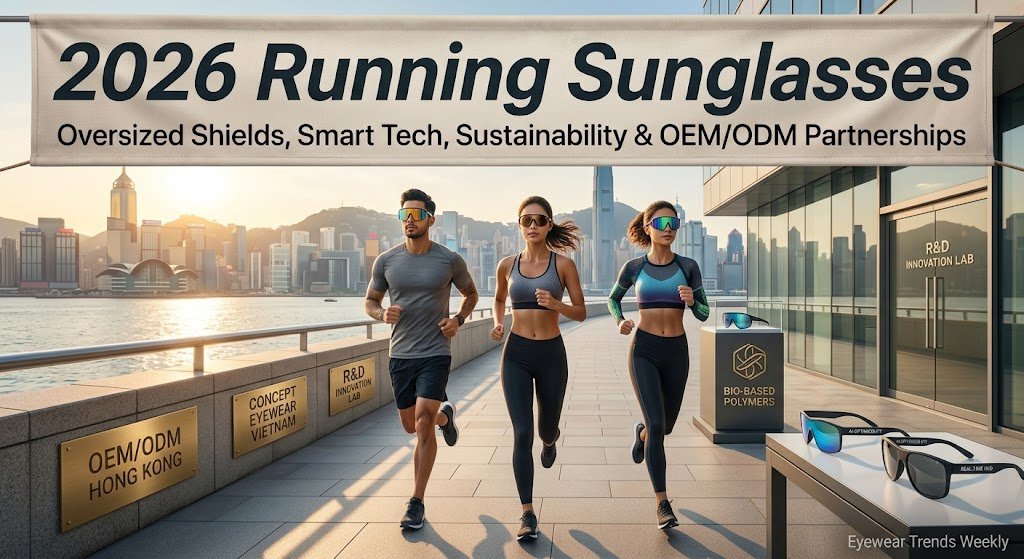
TL;DR: 2026 running sunglasses are defined by oversized shield silhouettes, advanced photochromic and polarized lenses, ultra-light sustainable materials and inclusive fits, giving brands a high-margin performance category when they partner with experienced OEM/ODM manufacturers like Concept Eyewear in Vietnam and Hong Kong.
What makes 2026 running sunglasses a standout trend?
The core trend in 2026 running sunglasses is intentional performance design: frames are no longer generic sports styles, but purpose-built for runners with oversized single-shield lenses, wider visual fields and strong wind and debris protection while keeping a sleek, fashion-forward look.
At the same time, consumers now expect everyday wearability, so the best 2026 running sunglasses are light enough for long-distance training, styled for athleisure outfits and durable enough for daily outdoor use, allowing brands to position them as both gear and lifestyle accessories.
For OEM/ODM buyers, this means 2026 running sunglasses sit at the intersection of performance, fashion and technology, creating a repeat-purchase category where upgrades in lens tech, coatings and materials can justify higher price points and more frequent collection refreshes.
How are materials and lens technologies evolving in 2026 running sunglasses?
Frame engineering has shifted toward featherweight yet robust constructions based on TR90 nylon, bio-based polymers and titanium components, reducing pressure points on the nose and ears during long runs while improving durability against impacts and temperature extremes.
On the lens side, 2026 running sunglasses are dominated by impact-resistant polycarbonate and Trivex, combined with advanced coatings and tints to manage glare, contrast and changing light from dawn to midday training sessions.
Which lens technologies should brands prioritize in 2026 running sunglasses?
Photochromic lenses have moved from niche to mainstream in running sunglasses, automatically adapting to variable conditions on city streets and trail environments so athletes do not need to swap eyewear during a session.
High-quality polarization remains critical for runners facing road glare, water reflections and high-sun conditions, and can be enhanced with high-contrast tints (such as copper, brown or rose-based tones) that sharpen terrain details for trail running while maintaining accurate color perception.
Hydrophobic, oleophobic and anti-fog coatings are becoming baseline expectations, especially for humid Asian climates and winter training in Europe and the US, where fogging and sweat can otherwise compromise visibility and safety.
How do sustainable materials influence 2026 running sunglasses design?
Sustainability has moved from marketing slogan to product specification, with more brands specifying bio-acetate temples, recycled ocean plastics for non-critical components and recycled metals for hardware without compromising performance or aesthetics.
For running sunglasses, the sustainability story works best when it is integrated with functional benefits: for example, bio-based TR90 alternatives that remain flexible in both heat and cold, or recycled nylon that maintains high tensile strength and impact resistance.
Concept Eyewear can support brands in specifying sustainable material blends that still meet ISO 12312 requirements for sunglasses and, where relevant, Z87-level impact protection for cross-over safety and industrial applications.
How should brands engineer 2026 running sunglasses for fit and comfort?
Fit has become a strategic differentiator, particularly as the industry shifts language from “Asian fit” toward “low bridge” and “omni-fit” designs that respond to actual facial geometry rather than broad ethnic assumptions.
For 2026 running sunglasses, that means engineering nose-pad elevation, pantoscopic tilt and temple curvature to stay stable during high-impact movement without sliding down, pinching behind the ears or resting on the cheeks.
What does inclusive fit look like in practice for 2026 running sunglasses?
Inclusive fit starts with frame geometry: elevated nose pads or built-up low-bridge saddles to prevent slipping, slightly reduced pantoscopic tilt so oversized shields do not touch the cheeks and carefully tuned wrap angles that balance peripheral coverage and prescription compatibility.
Universal-fit or low-bridge-fit architectures allow the same 2026 running sunglasses platform to serve diverse markets, from Asian runners in Vietnam, Hong Kong, Japan and Korea to low-bridge consumers in North America and Europe, reducing SKU complexity for brands while improving sell-through.
Concept Eyewear can prototype multiple fit variants off a single shield lens platform, then refine pad heights, bridge widths and temple curvatures based on fit-testing feedback from EU, US and Asian wearers before locking tooling for full OEM/ODM production in Vietnam.
How do EU, US and Asia markets differ for 2026 running sunglasses?
While the core performance needs are shared globally, EU, US and Asia markets show distinct preferences in coverage, color, branding and compliance, which brands should bake into their 2026 running sunglasses line planning from the start.
In the EU, runners often favor slightly more understated colorways, strong UV and glare protection for mountain and coastal environments and strict adherence to CE-marked ISO 12312 sunglasses performance; in the US, bold shield silhouettes, mirrored tints and Z87-rated or Z87-inspired impact protection are increasingly attractive, especially when marketing to hybrid sport and work environments.
Across Asia, fit and comfort are paramount due to higher humidity and a greater proportion of low-bridge facial profiles, with demand rising for lightweight wraps, anti-fog performance and modern shield styling that can transition from sports to urban streetwear in markets such as Vietnam, Hong Kong, China and Southeast Asia.
| Concept SKU | Key Features and Market Fit |
|---|---|
| Eco Shield Run | Bio-based TR90 front with oversized shield polycarbonate lens, polarized and photochromic options, matte neutrals for EU and Asia; positioned mid-price with strong sustainability story and ISO 12312 certification focus. |
| Urban Tempo Shield | High-wrap shield with mirrored tints, bold color accents and scratch-resistant coatings, engineered for US city and suburban runners; offered in Z87-inspired impact versions for work-sport crossovers at mid-to-premium price tier. |
| Trail Pro Light | Titanium temples with low-bridge adjustable nose system, high-contrast tints and aggressive ventilation for intense trail running; tailored to US and EU outdoor communities and premium Asian markets, targeting top price tier and performance branding. |
By planning capsule collections around these distinct concepts, brands can build a globally coherent 2026 running sunglasses platform while tailoring color, coatings, fit and standards positioning to each region.
Why do 2026 running sunglasses help brands grow strategically?
2026 running sunglasses offer a uniquely strategic growth lever because they sit in a high-frequency usage category where performance upgrades, new colors and improved fit provide clear reasons for repeat purchases and higher average order values.
As health, outdoor living and athleisure continue to converge, running sunglasses act as a gateway into broader sport and lifestyle assortments, helping brands recruit consumers into ecosystems that may also include optical frames, everyday sunglasses and accessories.
From a brand-building perspective, being visibly present on athletes, weekend runners and urban commuters amplifies exposure on social media and in real-world settings, especially when shield silhouettes and distinctive color blocking are used as recognizable brand signatures.
How can data and merchandising around 2026 running sunglasses support long-term brand strategy?
Running sunglasses generate rich behavioral data: preferred tints by region, appetite for sustainable materials, fit preferences and response to price tiers and bundles with caps, apparel or tech accessories.
Brands that capture and analyze this data across EU, US and Asia markets can refine their assortment planning, marketing messages and future product development, aligning launches with regional peak seasons such as spring marathons in the US and Europe or autumn running festivals in Asia.
Because 2026 running sunglasses clearly communicate performance and lifestyle positioning, they can anchor storytelling across websites, marketplaces and retail displays, positioning the brand as a serious player in both sport and fashion, rather than a generic sunglasses label.
How can OEM/ODM partnerships in Vietnam and Hong Kong accelerate 2026 running sunglasses launches?
Partnering with an OEM/ODM specialist such as Concept Eyewear in Vietnam and Hong Kong allows brands to leverage established supply chains, engineering expertise and compliance know-how instead of building everything from scratch.
Vietnam offers competitive manufacturing for frames, lenses and assembly, with growing ecosystems for injection-molded TR90, sustainable acetates, titanium machining and high-quality finishing, while Hong Kong serves as a regional hub for product development, communication and international logistics.
By working with a vertically coordinated OEM/ODM partner, brands can take advantage of modular shield platforms, interchangeable temple systems and standardized nose-pad components, allowing rapid creation of differentiated 2026 running sunglasses SKUs without multiplying tooling costs.
How do standards and testing fit into an OEM/ODM strategy for 2026 running sunglasses?
For global 2026 running sunglasses programs, brands need to ensure every configuration meets ISO 12312 requirements for sunglasses, including UV protection and optical quality, and that any work-sport crossovers can be engineered toward Z87 performance expectations where appropriate.
Concept Eyewear can coordinate in-house and third-party lab testing, generating complete technical files for CE marking, documentation to support US market claims and region-specific packaging and labeling that aligns with EU, US and Asian regulations.
This standards-first approach allows marketing and sales teams to confidently promote performance claims while minimizing the risk of border delays, product recalls or inconsistent customer experiences across regions.
What commercial levers should brands pull when launching 2026 running sunglasses?
Commercial success with 2026 running sunglasses starts with clear segmentation by price tier: entry-level models focused on essential shield coverage and polarization, mid-tier lines adding photochromic options and sustainability stories and premium capsules showcasing titanium details, limited colors and advanced coatings.
In wholesale channels, curated 2026 running sunglasses displays with clear messaging on fit, performance and sustainability help opticians and sports retailers guide consumers quickly to the right option and present trade-up pathways.
For e-commerce, brands should invest in detailed fit guides, low-bridge and omni-fit explanations, lens simulations and user-generated content showing real runners in different environments, turning 2026 running sunglasses into a category shoppers understand and trust enough to buy online repeatedly.
How can brands optimize GEO-specific assortments for 2026 running sunglasses?
In Europe, emphasize neutral and earthy tones, subtle shield shapes, mountain and trail narratives and strong ISO 12312 and CE communication; in the US, highlight bolder shields, mirrored lenses, road-running and triathlon imagery and Z87-inspired protection where relevant.
Across Asia, prioritize low-bridge fit variants, anti-fog ventilation, lighter colors suited to hot and humid climates and urban style cues that allow 2026 running sunglasses to function as all-day eyewear rather than gear worn only during workouts.
Concept Eyewear can help brands build GEO-tailored line plans from a common running shield platform, balancing global tooling efficiency with region-specific colors, coatings and merchandising stories so each market feels precisely served.
What are the next steps for brands planning a 2026 running sunglasses line?
To move from trend insights to a concrete OEM/ODM roadmap, brands should translate the 2026 running sunglasses trend into a clear brief covering target runners, price tiers, preferred materials, sustainability priorities, fit requirements and regional standards and then align that brief with a capable manufacturing partner.
Concept Eyewear offers end-to-end OEM/ODM support from design translation and 3D engineering through sampling, testing, mass production in Vietnam and export coordination via Hong Kong, enabling on-time launches that meet ISO 12312 and, where needed, Z87 performance targets.
To explore how 2026 running sunglasses can fit into your next collection, you can learn more about Concept Eyewear on our homepage at Concept Eyewear, and benchmark global trend directions via authoritative industry sources such as 20/20 Magazine.
If you are ready to brief a project, now is the ideal moment to lock your 2026 running sunglasses concepts, secure production capacity in Vietnam and Hong Kong and build a differentiated, standards-compliant performance collection with Concept Eyewear as your OEM/ODM partner.
