

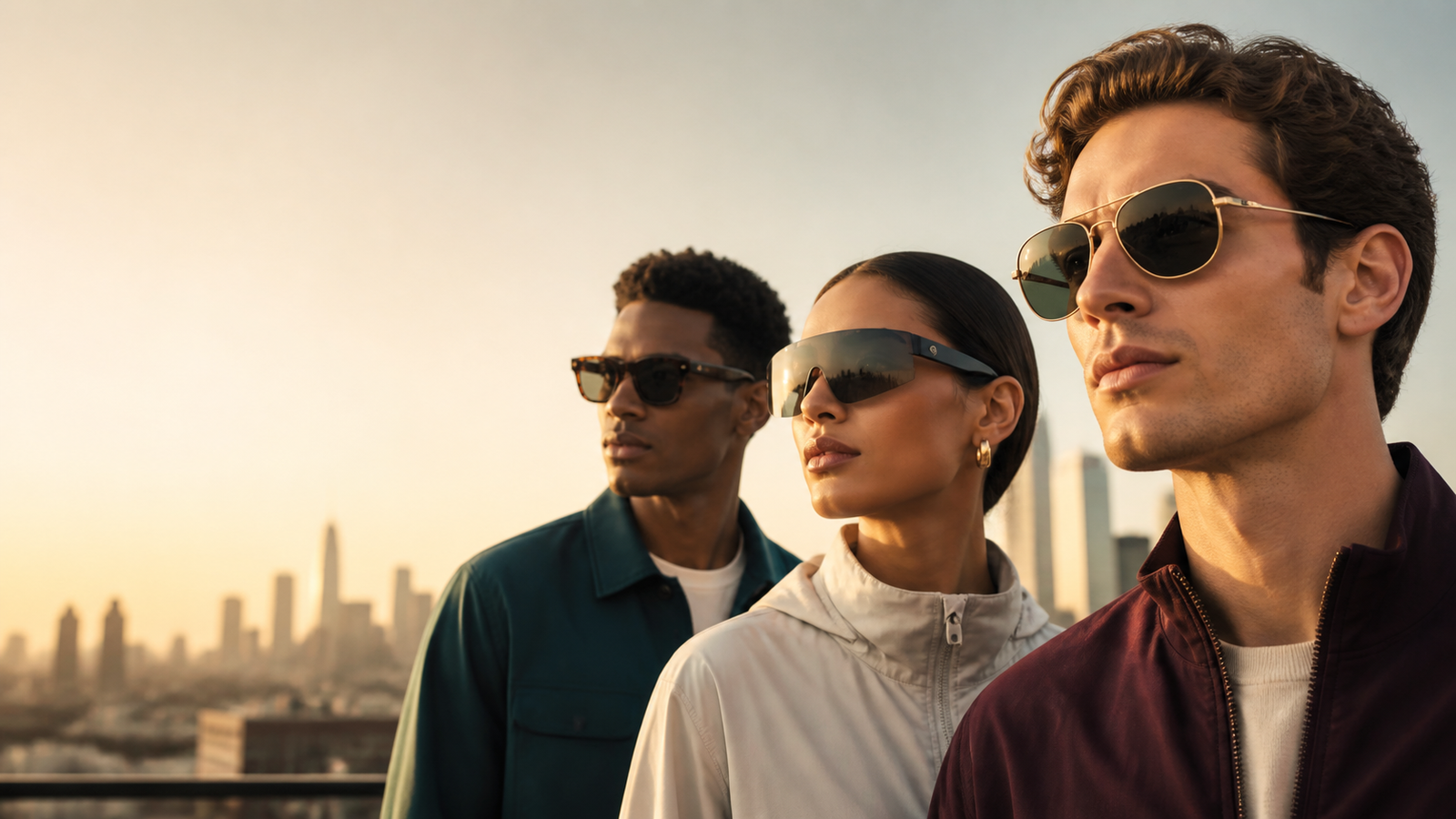
AI Smart Sunglasses are among the most powerful eyewear trends in 2026, turning everyday sunwear into fashion-led, voice-controlled assistants for daily tasks, navigation, and quick information access. For brands, this shift demands redesigns that balance comfort, durability, and sleek aesthetics with compact electronics and reliable performance standards.
Additionally, the winning approach is pairing sculpted silhouettes with robust electronics, ISO 12312 and Z87 performance, and scalable OEM/ODM manufacturing in Vietnam and Hong Kong. This combination supports brands seeking rapid scale while delivering consistent quality and compliant certifications across regions.
Why are AI smart sunglasses defining 2026 eyewear fashion?
In 2026, AI Smart Sunglasses have moved from niche gadget to mainstream fashion accessory.
Moreover, consumers no longer want tech-looking frames.
They expect hands-free assistance, content capture, and navigation.
The experience should feel as refined as premium acetate or thin metal designer sunwear.
Key launches from major platforms have normalized this category in retail and e-commerce. Smart eyewear now appears alongside traditional sunglasses in curated edits, with merchandising focused on lifestyle signals like travel, streetwear, and creator culture rather than pure tech specifications. For brands, this shift creates a clear opportunity: treat AI smart sunglasses as a core fashion SKU, supported by a robust OEM/ODM stack.
How are AI smart sunglasses blending fashion and technology in 2026?
The 2026 consumer expects AI Smart Sunglasses to look and feel like contemporary fashion eyewear. It should integrate technology so seamlessly that it disappears in daily wear. Brands should align style with comfort while ensuring the tech remains discreet. This balance helps broad adoption in daily life. Consumers expect wearable tech that enhances outfits without drawing attention.
Therefore, sunwear lines favor trend-right silhouettes such as soft rectangular wraps and modern aviators. Sculpted shield styles also appeal for bold evenings and active days. Collections integrate color, form, and light shaping to fit varied wardrobes. Electronics are embedded to support those shapes without dominating design.
The electronics are designed to support those shapes rather than dictate them. This approach keeps performance accessible while preserving the look of fashion eyewear. As a result, users can wear smart sunwear confidently in daily life.
For design and sourcing teams, the challenge is balancing aesthetics, ergonomics, and internal architecture. Concept Eyewear works with brands to translate design language into production-ready AI smart sunglasses: hiding microphones and speakers within slim temples, aligning cut-outs with front design lines, and engineering hinge and screw choices that withstand the added weight of circuit boards and batteries.
What frame silhouettes and materials work best for AI smart sunglasses?
Most successful AI smart sunglasses collections in 2026 fall into three silhouette families: soft-statement rectangular frames with medium wrap, shield or mask-style fronts with continuous lenses, and refined aviators with updated bridge and top-bar geometry. Each silhouette signals a different lifestyle story and price tier, but all share the same requirement: enough volume in the front and temples to house electronics safely without feeling bulky on the face.
Acetate remains the hero material for fashion-first AI smart sunglasses because it offers sculptural volume, color depth, and stable milling tolerances. For lighter-weight concepts, stainless steel or beta-titanium temples paired with acetate fronts provide stiffness and slim profiles, ideal for gender-neutral AI smart sunglasses that suit both EU and US markets where comfort and minimalism are highly valued.
How do lenses and coatings support AI smart sunglasses performance?
Lens strategy is critical in AI smart sunglasses because the product must function both as a sunwear category and a wearable device. ISO 12312-compliant lenses ensure adequate UV protection and safe luminous transmittance for daily use, while mirrored or gradient tints can be selected to complement the camera’s dynamic range and reduce flare in recorded content.
Many 2026 collections use high-index or polycarbonate lenses with hydrophobic, oleophobic, and anti-scratch coatings to protect against outdoor use, travel, and frequent handling. When AI smart sunglasses are offered in prescription variants, wrap designs require careful base curve selection and digital surfacing to keep optics crisp across the wider field of view. Partnering with an OEM/ODM like Concept Eyewear enables tight integration between lens design, camera placement, and internal display (for AR models) so that optical performance aligns with both fashion and tech expectations.
How does regional market fit shape AI smart sunglasses design for EU, US and Asia?
AI smart sunglasses may share global technology platforms, but regional fit and aesthetic preferences differ significantly between EU, US, and Asia. EU consumers lean toward understated luxury: sculpted acetate, warm tortoise, deep browns, and subtle lens tints that pair well with quiet-luxury fashion. US buyers accept bolder shield and modern aviator profiles, especially for travel, sports, and creator-focused content creation.
In Asia, fit and bridge geometry matter even more. Asian-fit nose bridges, lighter weights, and careful temple angles are essential to prevent slippage and cheek contact in humid climates. Concept Eyewear’s engineering teams in Vietnam and Hong Kong routinely build dual-fit or region-specific AI smart sunglasses SKUs, adjusting base curves, nose pad geometry, and temple lengths while preserving a consistent global design language.
What standards and testing workflows are critical for AI smart sunglasses?
Beyond ISO 12312 for sun lens performance, buyers increasingly reference impact and safety standards drawn from industrial and sports eyewear. While not every AI smart sunglasses collection needs full industrial certification, aligning design and material choices with Z87-style impact resistance gives retailers and online platforms a stronger safety story and reduces warranty risk.
OEM/ODM workflows typically include material verification, lens transmittance measurement, impact testing for selected SKUs, and environmental cycling to ensure electronics remain stable under heat, humidity, and sweat exposure. For brands working with Concept Eyewear, test plans are co-developed early in the design process to match price tier and market positioning, ensuring AI smart sunglasses meet or exceed the expectations of EU, US, and Asia regulators and retail partners.
How can OEM/ODM partnerships in Vietnam and Hong Kong unlock AI smart sunglasses scale?
To make AI smart sunglasses commercially viable, brands need more than a prototype: they require costed BOMs, capacity planning, and multi-region compliance. OEM/ODM partners in Vietnam and Hong Kong provide this backbone, combining eyewear manufacturing experience with electronics integration, packaging design, and international logistics.
Vietnam offers competitive labor costs, strong acetate and metal frame production, and proximity to lens and coating suppliers. Hong Kong provides a strategic coordination hub for sourcing, finance, and trade compliance, linking components from China, lenses from regional suppliers, and electronics from technology partners.
Concept Eyewear bridges these hubs, enabling brands to move from sampling to stable mass production. This includes clear MOQs, lead times, and landed-cost scenarios for AI Smart Sunglasses. These steps reduce risk and align production with brand timelines. Additionally, the model supports regional sourcing and streamlined compliance.
What does a typical AI smart sunglasses OEM/ODM collaboration look like?
A standard collaboration begins with a design and feature brief: target price tier, retail channels, key markets (EU, US, Asia), and desired AI platform or electronics supplier. Concept Eyewear then translates the brief into CAD models, material proposals, and a preliminary engineering layout that shows camera, microphone, battery, PCB, and antenna placement within the chosen AI smart sunglasses silhouette.
Once prototypes are approved, the team defines test plans, colorways, lens options, and packaging. Parallel workstreams include ISO 12312 lens validation, Z87-inspired impact checks for higher-performance SKUs, and ergonomic fit testing on a wide range of face shapes. OEM/ODM documentation—such as assembly instructions, QC checklists, and component traceability—ensures that scaling from pilot runs to tens of thousands of units per month preserves quality and brand identity.
Which AI smart sunglasses concepts work best for different price tiers and regions?
Not every brand needs a full three-SKU lineup, but thinking in terms of distinct concepts helps structure merchandising and e-commerce positioning. Below is a simple framework comparing three AI smart sunglasses concepts across price tiers, regional positioning, and standards focus that sourcing teams can adapt to their own collections.
| Concept | Price Tier | Regional Positioning | Standards Focus | Notes |
|---|---|---|---|---|
| Soft rectangular AI smart sunglasses | Mid | EU & US everyday fashion | ISO 12312 UV, optional Z87-inspired impact | Acetate front with slim metal temples, warm tortoise and nude palettes for daily wear. |
| Shield-style AI smart sunglasses | Upper mid / premium | US & Asia streetwear and travel | ISO 12312 UV, enhanced wrap optics | Single-piece lens, strong wrap, ideal for creator and sports storytelling with bold colors. |
| Modern aviator AI smart sunglasses | Mid | Global business and city wear | ISO 12312 UV, lightweight impact checks | Thin metal front with acetate tips, gender-neutral silhouettes and softer gradient lens tints. |
Using this structure, brands can decide where to anchor their first AI smart sunglasses launch. A single soft rectangular SKU may be enough for conservative markets, whereas lifestyle-focused labels can justify a three-SKU capsule to cover everyday wear, high-impact street style, and travel-ready silhouettes.
How should brands merchandise and sell AI smart sunglasses in 2026?
Successful merchandising treats AI smart sunglasses as both fashion and function. Retailers and DTC brands position them near premium sunglasses, using clear storytelling: hands-free AI, content capture, travel convenience, and elevated styling. Product detail pages highlight fit, materials, lens performance, battery life, and platform compatibility in separate sections to avoid overwhelming consumers.
Price tiers typically start at accessible mid-range levels to encourage trial, then ladder up into premium SKUs with more advanced electronics or limited-edition materials. Bundled accessories—like charging cases, microfiber pouches, and co-branded lens cloths—help add perceived value. Internal linking to broader brand stories and sustainability content reinforces trust; for example, brands can link to their manufacturing partners such as Concept Eyewear to showcase OEM/ODM capabilities and compliance.
Which external signals support the AI smart sunglasses story?
When educating buyers and retail partners, it is helpful to reference independent coverage of smart eyewear trends. Industry titles that analyze category growth, adoption, and consumer behavior lend credibility to brands entering AI smart sunglasses for the first time.
Eyewear and optical news platforms regularly cover smart glasses launches, retail pilots, and regulatory changes. Linking to an external resource such as Vision Monday in B2B content or internal training materials can support category understanding, while the consumer-facing brand story remains focused on lifestyle and design.
How can Concept Eyewear help you launch AI smart sunglasses collections?
Concept Eyewear is an established OEM/ODM manufacturer operating between Vietnam and Hong Kong, specializing in frames, lenses, and performance eyewear standards. For AI smart sunglasses, this expertise extends into electronics integration, supply chain planning, and international trade compliance, allowing brands to move quickly while maintaining safety, quality, and regulatory alignment.
Teams can work with Concept Eyewear to co-design AI smart sunglasses silhouettes, specify acetate, metal, and lens combinations, and define the testing path toward ISO 12312-compliant UV protection and Z87-inspired impact performance where relevant. Vietnam-based production offers cost-effective volume manufacturing and strong finishing capabilities, while Hong Kong provides financial, logistics, and compliance coordination across EU, US, and Asia markets.
If your brand is exploring AI smart sunglasses for 2026 and beyond, partnering with Concept Eyewear as an OEM/ODM in Vietnam and Hong Kong allows you to focus on brand, storytelling, and sales while we manage engineering, production, and standards. With the right silhouettes, materials, and test plans, AI smart sunglasses can become a long-term, high-margin category in your portfolio rather than a one-season experiment.
To discuss AI smart sunglasses collections aligned with ISO 12312 and appropriate Z87-style performance, and to plan EU, US, and Asia market roll-outs, contact Concept Eyewear and explore how an OEM/ODM partnership rooted in Vietnam and Hong Kong can power your next generation of fashion-led smart eyewear.
