


An eyewear receiving dock-to-stock playbook is the warehouse inbound brief apparel and lifestyle brands use after OEM cartons arrive—to match packing lists, log exceptions, put stock away, and hand off board-ready units so United States and South America doors open on time. It is inbound discipline after the factory ships, before anyone marks stock available.
This guide sits beside our case pack ship carton playbook, fill rate door allocation playbook, inventory turns playbook, markdown exit playbook, open-to-buy plan, sell-through rate playbook, and replenishment cadence playbook. Light siblings include the merchandising calendar, core carryover, seasonal capsule, apparel assortment, category expansion, lifestyle launch, and AOV. Here we stay on eyewear receiving after the cartons land.
Quick answer: what makes this eyewear receiving playbook work?
In short, eyewear receiving works when the warehouse compares carton IDs to the packing list, records shortages and damage before putaway, and only then sends sellable units to boards—so US and South America programmes do not treat a sealed box as proven stock.
- Match carton marks and packing lists before anyone opens the whole wave
- Count style, colour, and size against the agreed allocation
- Photograph exceptions and hold damaged pairs out of available stock
- Put sellable units into labeled locations before any board pull
- Keep Japan light unless those doors are already on the brief
Why eyewear receiving and dock-to-stock matter after case pack
Door-ready cartons only help if someone checks what actually arrived. Trade and warehouse guides keep saying the same thing: compare the delivery to the documents, describe exceptions clearly, and keep scratched or mixed frames off honest boards.
For example, JUNLIAN on receiving records asks buyers to log carton IDs and photo-backed exceptions. JUNLIAN on carton packing allocation ties those references back to inner packs. Logi Frontier on warehouse storage stresses piece-level checks. OpticCount on goods receiving and Jelo on optical inventory treat an order as expectation, not proof that usable units landed. IDOC on practice receiving still applies a simple dock habit: check the packing slip, then place product. Board discipline from CV Optical, Optometric Management, ReviewOB, and Vision Monday still applies—messy inbound delays honest boards.
Consequently, US and South America programmes that lock a receiving sheet early arrive at RFQ with cleaner inbound plans. Japan stays light.
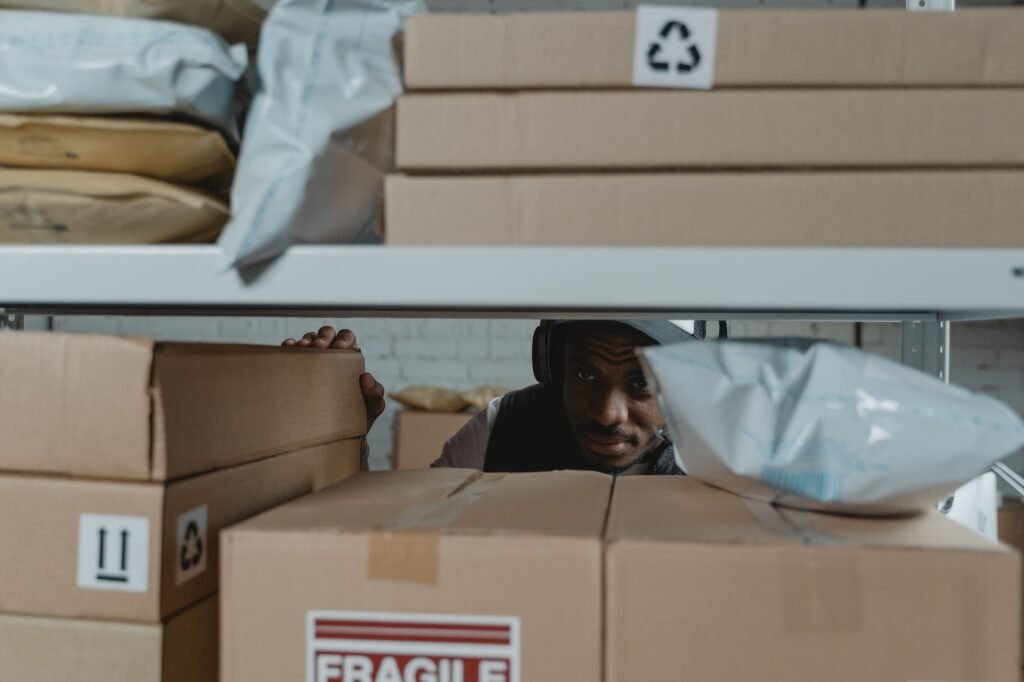
How does eyewear receiving differ from case pack, fill rate, and exit?
Clarity matters. Use this map so teams do not argue past each other:
- Case pack / ship carton. Our case pack ship carton playbook owns factory inner packs and master cartons.
- Fill rate / door allocation. Our fill rate door allocation playbook owns how first-wave depth lands across doors.
- Open-to-buy. Our OTB playbook owns remaining buy capacity and share buckets.
- Inventory turns. Our inventory turns playbook owns how productive stocked depth is after doors open.
- Sell-through. Our sell-through playbook owns velocity after doors open—hub only here.
- Replenishment. Our replenishment cadence playbook owns when winners return later.
- Markdown exit. Our markdown exit playbook owns what to do when soft depth ages.
- Calendar / carryover / capsule / assortment. Those guides own timing, evergreen depth, short drops, and SKU roles—link lightly; do not rewrite them here.
- This eyewear receiving guide. How inbound cartons are checked, exceptions are logged, and board-ready pairs leave the dock.
Therefore, finish packing, allocation, capacity, turns, velocity, cadence, and exit maps first. Use this playbook when the warehouse needs a dock-to-stock brief.
How should you stage eyewear receiving from dock to stock?
Keep the eyewear receiving path simple and qualitative. Do not invent public dock times or receive rates.
- Document match. Compare carton IDs, SKU, quantity, and optical–sun flags to the packing list before putaway.
- Piece check. Confirm style, colour, and size on opened samples; do not assume a carton label equals every pair inside.
- Exception hold. Photograph damage, shortages, and substitutions; keep those pairs out of available stock.
- Putaway. Slot sellable units into labeled locations so the next door pull is not a hunt.
- Board-ready handoff. Only after the record is posted should US and South America lanes stage boards.
Moreover, US DTC fashion and South America wholesale often need different inbound rhythms. Never force one mystery mixed carton into available stock.
How do you brief an OEM so inbound checks stay clean?
Attach a one-page inbound sheet to your next RFQ checklist and tech pack. Name packing-list format, carton marks, solid-versus-mixed rules, and how exceptions should be photographed. Keep acetate or metal programmes on the usual MOQ 400 pcs/model and about 90–100 day lead path—FOB China or Vietnam—without debating public price. Concept Eyewear has 26 years in fashion frames, with Vietnam production at Block E5 & 6, Hoa Hiep Industrial Zone, Dong Hoa, Phu Yen (+842573550435), paired with Dongguan. See how to choose an eyewear OEM, compliance, and manufacturing techniques.
Common mistakes when cartons hit the dock
- Treating the packing list as on-hand stock before anyone opens a carton
- Mixing damaged pairs into available locations “to sort later”
- Skipping photos and then arguing from memory
- Sending frames to boards before putaway locations are labeled
- Waiting for replenishment to fix a broken first-wave receipt
Eyewear receiving FAQ
What is a dock-to-stock playbook? An inbound brief that matches cartons to documents, logs exceptions, puts sellable units away, and hands off board-ready pairs after the OEM ships.
Does receiving replace case pack? No. Case pack decides how depth is packed into cartons; eyewear receiving decides how those cartons are checked and put into stock.
Does receiving replace inventory turns? No. Turns judge productivity after doors open; eyewear receiving keeps short or damaged depth out of the available count.
Start your inbound brief with Concept Eyewear
Bring your packing-list format, exception path, and board-ready handoff ask. We help US and South America programmes land clean cartons. Visit the homepage, read About, or contact the team.
