


Laminated acetate eyewear is a frame built from two or more acetate layers bonded together. When the rim or temple is cut and finished, a second colour or pattern can show at the edge. It is a material treatment, not a new silhouette. A rectangle, a panto, or a cat-eye can all carry it. If the layers are vague in the brief, the edge can look muddy, stepped, or uneven from one size to the next.
This design note is not a twin of our sculptural acetate guide, which is about volume and bevels, or our tone-on-tone acetate colours page, which is a palette story. See our product manufacturing techniques.
Quick answer: what is laminated acetate eyewear for brand assortments?
Laminated acetate eyewear earns a board slot when the second layer is planned as part of the sheet, not painted on later.
- Say this is a layered sheet, not a single-color acetate and not a sculptural volume brief
- Give the layer count, which face is outer, and the colour or pattern of each layer
- Name where the inner layer should show — the rim edge, a bevel, the endpiece, or the temple — and how that look stays consistent across the size ladder
Why laminated acetate eyewear still earns a board slot
Public 2026 coverage still treats layered acetate as a live design tool. Concept Eyewear does not claim to supply the brands in that coverage.
A 10 November 2026 Vision Monday launch note lists “unexpected laminations” among the details that can change a familiar shape without a big gesture. An 8 November 2026 NZ Optics report describes an acetate lamination shown at Silmo 2026, with a contrasting-colour layer sandwiched between two thinner outer layers. An 8 September 2026 Vision Monday note mentions two-tone laminated acetate, and a style that combines opaque and transparent acetates.
Our OEM FAQ already notes that we can develop laminated acetate colorways, and that brands are moving toward richer acetates such as layered laminations.
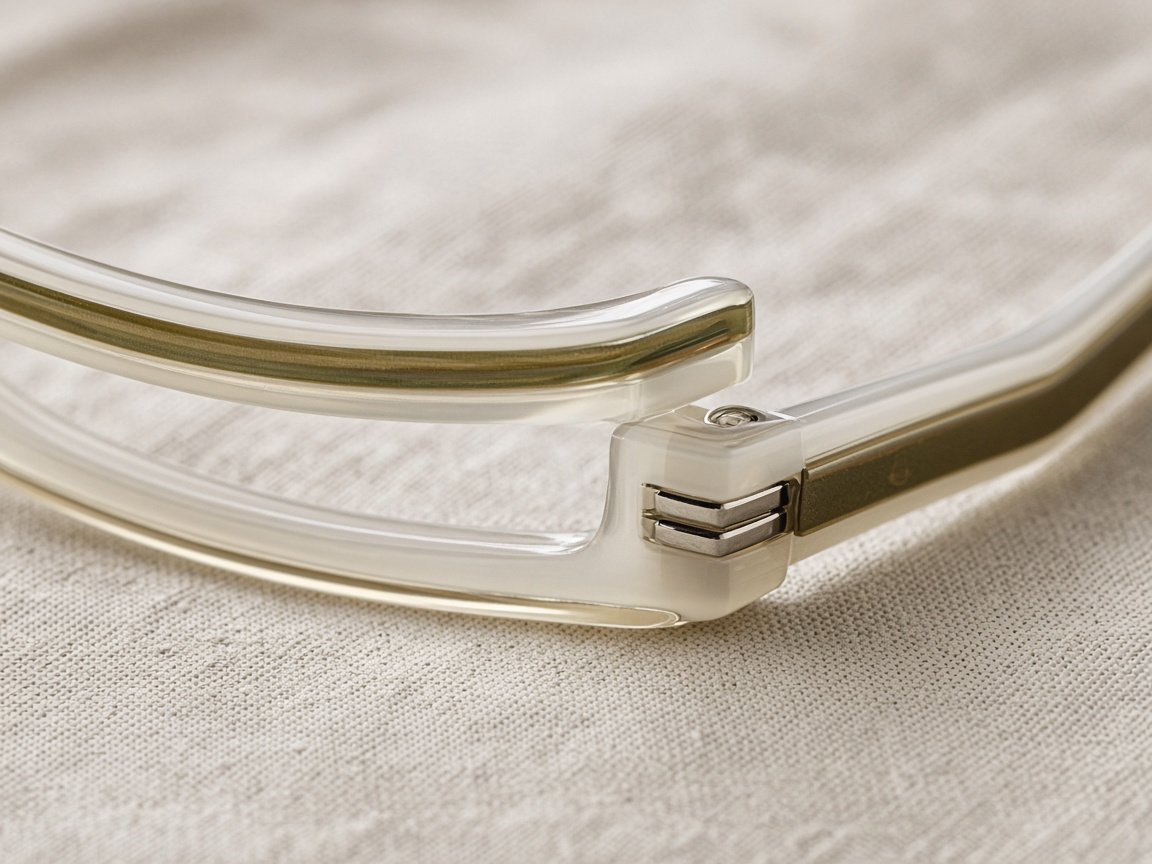
How laminated acetate eyewear differs from related board options
A single-color acetate sheet is the same colour all the way through. Laminated acetate eyewear bonds layers so a hidden colour or pattern appears when the rim is cut and polished.
Sculptural acetate is about controlled volume, bevels, and mass. Lamination is about how the sheet is built.
Tone-on-tone acetate colours is a palette story — close colours, often with a matching tint. It does not tell the factory how many layers to bond or where the inner colour should show.
Layered colour on Japan-focused injection frames is a different material system. Fashion-led open-ear work stays on our AI glasses manufacturer page.
What brands should brief an OEM for laminated acetate eyewear
Write the layers and the front as one spec.
- Layer count, and which face is the outer wear surface
- Colour or pattern of each layer, including any transparent or tortoiseshell sheet
- Where the inner layer should show: rim edge, bevel, endpiece, temple, or a mix
- Thickness of each layer and of the finished front
- How the edge should look after cutting and polishing — clean and flush, not stepped or cloudy
- Alignment across the size ladder and colourways, so the reveal stays in proportion
For acetate and metal programmes, the usual MOQ is 400–600 pcs per model, often from 400 pcs FOB China or from 600 pcs FOB Vietnam, typically across three colours. Acetate and combination lead times are commonly around 90–110 days. Commercial price stays private. Vietnam production sits at Block E5 & 6, Hoa Hiep Industrial Zone, Dong Hoa, Phu Yen, paired with Dongguan. See our OEM FAQ, manufacturing techniques, and acetate CNC finishing notes.
Assortment roles on a US board
Laminated acetate eyewear often works as a hero or capsule colourway on a familiar silhouette, not as a replacement for every core SKU. A solid black or a quiet tortoise can still do the volume work. Keep the outline easy to read and let the layered edge be the talking point, then add one or two laminate colourways beside a reliable core.
Common mistakes to avoid
- Treating the laminate as paint, a film, or a late decoration on a finished single-color front
- Not saying where the inner layer should show
- Making the outer layer too thin, so the edge chips or the inner colour breaks through unevenly
- Letting the reveal drift across the size ladder
- Confusing a lamination brief with a sculptural volume brief, or with a tone-on-tone palette only
FAQ: laminated acetate eyewear for brand programmes
What is laminated acetate eyewear? A frame whose acetate is made of two or more bonded layers, so a second colour or pattern can show at the edge, bevel, or temple. It is a material treatment, not a new silhouette.
How does it differ from a single-color acetate frame? A single sheet is one colour all the way through. A laminate bonds layers so depth or a hidden colour appears when the rim is cut and finished.
How does it differ from sculptural acetate or tone-on-tone colour? Sculptural work is about volume and bevels. Tone-on-tone is a palette story. Lamination is how the sheet itself is built.
What should a brand send the OEM? Layer count and outer face, colour or pattern of each layer, where the inner layer should show, thickness, edge finish, and how the look stays consistent across sizes and colourways.
What MOQ and lead time are typical? Acetate and metal programmes commonly plan around 400–600 pcs per model, often from 400 pcs FOB China or from 600 pcs FOB Vietnam, and about 90–110 days for acetate and combination work. Commercial price stays private.
Talk to Concept Eyewear
If you are planning laminated acetate eyewear for a US assortment, contact Concept Eyewear. We are a Hong Kong–rooted OEM/ODM partner with 26 years in fashion frames, and production in Vietnam (Phu Yen) and Dongguan. Share the layer drawing, the reveal, and the size ladder to discuss programme fit.
